The global energy crisis is forcing governments to confront a question that extends far beyond the price of oil: how can countries secure the electricity they need without creating new dependencies or undermining their climate goals.
By Ankush Kumar
At the Berlin Global Dialogue on 21 October 2026, energy executives and financiers discussed how geopolitical tensions are reshaping energy markets, artificial intelligence is driving up electricity demand, and governments are seeking to strengthen domestic energy capacity. Yet the response is far from straightforward. Renewable energy can reduce dependence on imported fossil fuels, while grid bottlenecks and the need for reliable power are creating fresh opportunities for gas-fired generation.
The crisis could give the clean-energy transition a fresh push. But it could also encourage governments to invest in fossil-fuel infrastructure that keeps them dependent on it for decades.
From ‘just in time’ to ‘just in case’
Energy security is increasingly influencing investment decisions and industrial policy. Fatih Birol, executive director of the International Energy Agency (IEA), captured this shift with a simple formulation: the concept of ‘just in time’ is being replaced by ‘just in case’.
For decades, many countries prioritised efficiency, relying on international markets to provide affordable energy and other essential goods. Geopolitical disruption has exposed the vulnerabilities of that model, prompting governments and businesses to reconsider how much supply-chain risk they are willing to accept.
Birol also highlighted the disruption to two critical energy routes: Russian energy supplies flowing from western Siberia and energy shipments passing through the Strait of Hormuz. The disruption of Russian pipeline gas supplies to Europe since 2022, alongside the Hormuz crisis, illustrates how geopolitical shocks can force countries to reassess established supply relationships.
Domestic renewable energy can reduce exposure to volatile international fuel markets because solar and wind power do not require continuous fuel imports. However, the transition is not automatic. Faced with immediate supply pressures and rising electricity demand, governments may also turn to coal, expand gas infrastructure or secure additional fossil-fuel supplies. Such measures can improve short-term security but risk locking in emissions and creating infrastructure that remains in use long after the immediate crisis has passed.
The grid bottleneck holding back the transition
One of the most significant obstacles is no longer simply the capacity to generate clean electricity. It is the ability to connect that electricity to the grid and deliver it where it is needed.
Anne-Laure de Chammard, group executive vice president, Siemens Energy, highlighted the scale of the challenge. More than 2,500 gigawatts of projects – encompassing renewable generation, storage and large electricity-consuming facilities such as data centres remain stalled in grid-connection queues worldwide.
The backlog illustrates a growing mismatch between the pace of energy investment and the infrastructure required to support it. “Renewable projects may be ready to generate electricity, but without sufficient transmission capacity, grid connections and flexibility, their potential remains unrealised,” asserted Chammard.
The time required to build new infrastructure compounds the problem. She further added that planning, permitting and completing new grid infrastructure can take five to 15 years, while new data centres can be built in as little as one to three years.
Expanding and modernising electricity networks requires substantial investment, lengthy planning processes and coordination between governments, regulators and private companies. The IEA estimates that annual grid investment, currently around $400bn, will need to increase by roughly 50% by 2030 to meet forecast electricity demand.
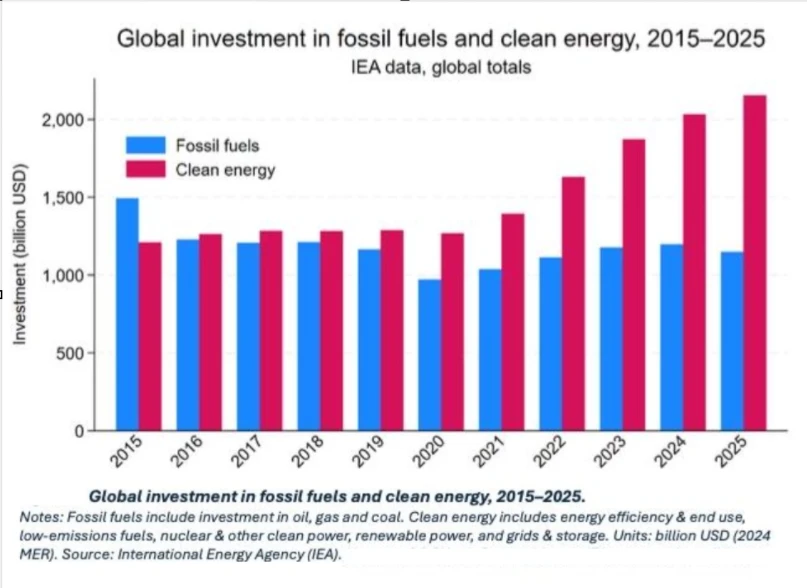
Without faster investment and more effective use of existing networks, countries risk spending billions on new energy projects while leaving some of the electricity they could produce undelivered.
AI adds another layer of complexity
The rapid expansion of artificial intelligence is intensifying these pressures. Data centres require large, reliable electricity supplies, often on timelines that existing energy infrastructure cannot accommodate.
According to the IEA, global data-centre electricity consumption is projected to rise from approximately 485 terawatt-hours in 2025 to around 950 terawatt-hours in 2030. This would nearly double consumption in five years, bringing data centres to about 3% of global electricity demand by the end of the decade.
The challenge is not simply the volume of electricity required, but also the need to deliver it reliably and close to where demand is growing. Nathalie Oosterlinck, chief executive officer, JERA Nex bp, highlighted the mismatch between the location of electricity generation and major centres of consumption.
‘The challenge is not simply producing more electricity; it is making sure that electricity is available where the demand is.’
Wind and solar generation varies with weather conditions and the time of day. Storage, stronger grids, flexible demand and a diverse mix of generation technologies can help ensure a reliable supply. Oosterlinck shared that gas-fired power is also attracting attention as a major source of dispatchable electricity when it comes to data centers. Such power plants can respond when demand rises or renewable output falls.
In the US, natural gas accounts for more than 40% of the electricity supply serving data centres, according to the IEA. It is also projected to provide the largest increase in electricity supply for US data centres through 2030, adding more than 130 TWh of annual generation.
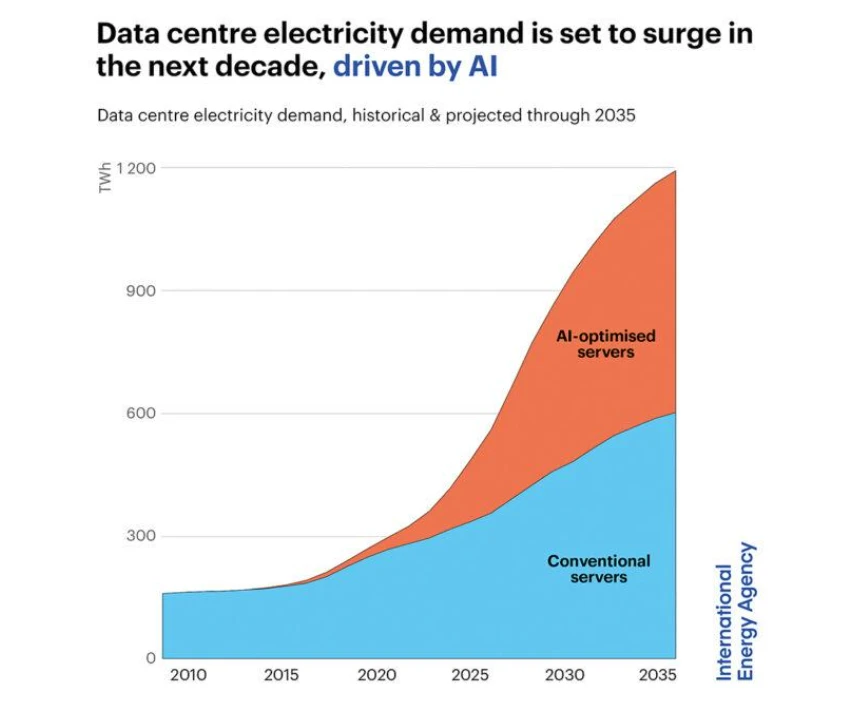
Globally, renewables are expected to meet nearly half of the additional electricity demand from data centres, with natural gas and other sources also contributing.
This creates a difficult question for policymakers: will new gas capacity provide a temporary bridge while cleaner infrastructure catches up, or become a long-term commitment that complicates decarbonisation?
The answer will depend on investment decisions, grid development, technology costs and the pace at which clean electricity can be delivered reliably.
Capital and supply chains will determine the pace
Financing is another critical part of the equation. Elif Bilgi Zapparoli, managing director, Bank of America emphasised the importance of mobilising capital beyond traditional bank lending, including through capital markets, sovereign financing and private credit.
“Meeting rising energy demand will require substantial investment not only in generation but also in transmission networks, storage, industrial capacity and emerging technologies,” she explained. The IEA has warned that data-centre investments have grown beyond what companies can comfortably finance from their own balance sheets alone, making capital-market funding increasingly important.
The ability to mobilise capital at scale will be essential, particularly in markets where borrowing costs are high or investment risks remain difficult to assess. Energy security is becoming not only a question of access to resources and technology, but also of which countries can finance the infrastructure required to secure them.
At the same time, reducing dependence on imported fossil fuels could create new dependencies on imported solar modules, batteries, critical minerals and other clean technologies.
The IEA’s Energy Technology Perspectives 2026 report highlights the concentration of clean-technology manufacturing in China. Beijing accounts for around 85% of global solar supply-chain production capacity, with its share reaching approximately 95% for solar wafers.
The concentration is similarly pronounced in the rare-earth supply chain. In 2024, China accounted for around 60% of global mined production of magnet rare earths, 91% of refined output and 94% of permanent-magnet production, according to the IEA.
These concentrations expose countries to potential supply disruptions, export restrictions and geopolitical tensions. They also complicate efforts to build domestic clean-energy industries, as governments seek to balance affordability, industrial competitiveness and strategic autonomy.
Generating more electricity at home does not necessarily make a country energy-independent. If it still relies on a handful of foreign suppliers for solar panels, batteries or critical minerals, important vulnerabilities remain
Security must reinforce decarbonisation
The energy-security crisis presents both an opportunity and a risk for the global transition. It strengthens the case for renewable energy while exposing the practical constraints that prevent countries from deploying it quickly enough.
The decisive factor will be whether governments treat the crisis as a reason to accelerate investment in grids, storage, clean generation and diversified supply chains, or primarily as a justification for expanding conventional energy infrastructure.
Energy security is no longer simply about securing access to fuels. It is increasingly about building the capacity to generate, transmit and finance reliable electricity.
The ultimate test is whether countries can strengthen their resilience without replacing one set of vulnerabilities with another. The transition’s success will depend not only on how much clean energy the world can produce, but also on how quickly it can build the systems needed to deliver it.