At the Berlin Global Dialogue, India’s commerce minister urged Europe to deepen industrial ties with India, warning that regulatory barriers could undermine competitiveness and inviting Germany’s Mittelstand to help shape the partnership.
By Ankush Kumar
BERLIN — “Trust is the new rare earth.”
With that phrase, Piyush Goyal, India’s minister of commerce and industry, pointed to a shift in the way countries approach global trade. In today’s uncertain economic environment, trust is becoming harder to find and, as a result, more valuable. Confidence and reliability are increasingly important in deciding which countries and businesses can build lasting partnerships.
Speaking at the Berlin Global Dialogue at ESMT Berlin on 22 October, Goyal called for a closer economic relationship between India and Europe. His message was both an invitation to invest and a warning that regulatory complexity and protectionism could weaken the industrial competitiveness they are intended to protect.
India, he argued, wants to work across geopolitical blocs rather than force businesses to choose between them. Its expanding network of free trade agreements is intended to open markets, diversify commercial relationships and position the country as a manufacturing base for international companies.
For Germany, Goyal had a particular invitation: he wanted the country’s Mittelstand — its network of specialised manufacturers, engineering companies and often family-owned businesses — to invest in India, share technical expertise and help develop skills.
Trade is only the beginning
Goyal said India had concluded nine Free Trade Agreements (FTAs) over the preceding four and a half years, covering 38 countries whose combined economies represented approximately $60tn in gross domestic product. Further negotiations with Canada, Israel, the Gulf Cooperation Council, Mexico, South Africa, Brazil and other partners could, he said, expand that potential economic reach to $85tn.
These figures represent the combined GDP of existing and prospective trading partners, not the trade India can automatically secure. Nevertheless, they illustrate New Delhi’s ambition to widen its commercial options as geopolitical tensions make established supply chains less predictable.
India offers European companies a large domestic market, manufacturing opportunities and scope to develop industrial supply chains. European businesses, in turn, can bring advanced engineering, specialist machinery and technical expertise to India’s industrial development.
The challenge is converting that complementarity into productive investment and commercially viable partnerships.
Europe’s regulatory dilemma
Goyal’s strongest criticism concerned Europe’s growing reliance on regulation and trade restrictions to protect domestic industries.
“Every minister that we meet from Europe comes with a set of regulations,” he said, arguing that the cumulative burden was making business increasingly difficult.
Regulation has legitimate purposes, from environmental protection and product safety to reducing strategic dependencies. But compliance costs, overlapping requirements and restrictions on market access can also raise prices and make domestic producers less competitive.
Goyal warned that restrictive measures could provoke reciprocal action from trading partners, creating a cycle of higher costs and weaker international trade. For Germany, whose industrial economy depends heavily on engineering, manufacturing and exports, the implications are significant.
He pointed to difficulties facing the German automotive industry as an example of the wider pressures on European competitiveness.
The argument is not that regulation should disappear. It is that policymakers must assess its cumulative effects, particularly when industrial companies are already managing high investment requirements and the transition to cleaner production.
Competitiveness and the climate transition
The tension is especially acute in decarbonisation. Europe wants to reduce industrial emissions without sacrificing its manufacturing base. Its climate policies increasingly influence the economics of producing and importing emissions-intensive goods, including steel.
For India, such measures raise questions about market access, the distribution of climate-related costs and the ability of developing economies to expand industrial capacity. For Europe, the challenge is to maintain credible environmental standards without making cleaner production prohibitively expensive.
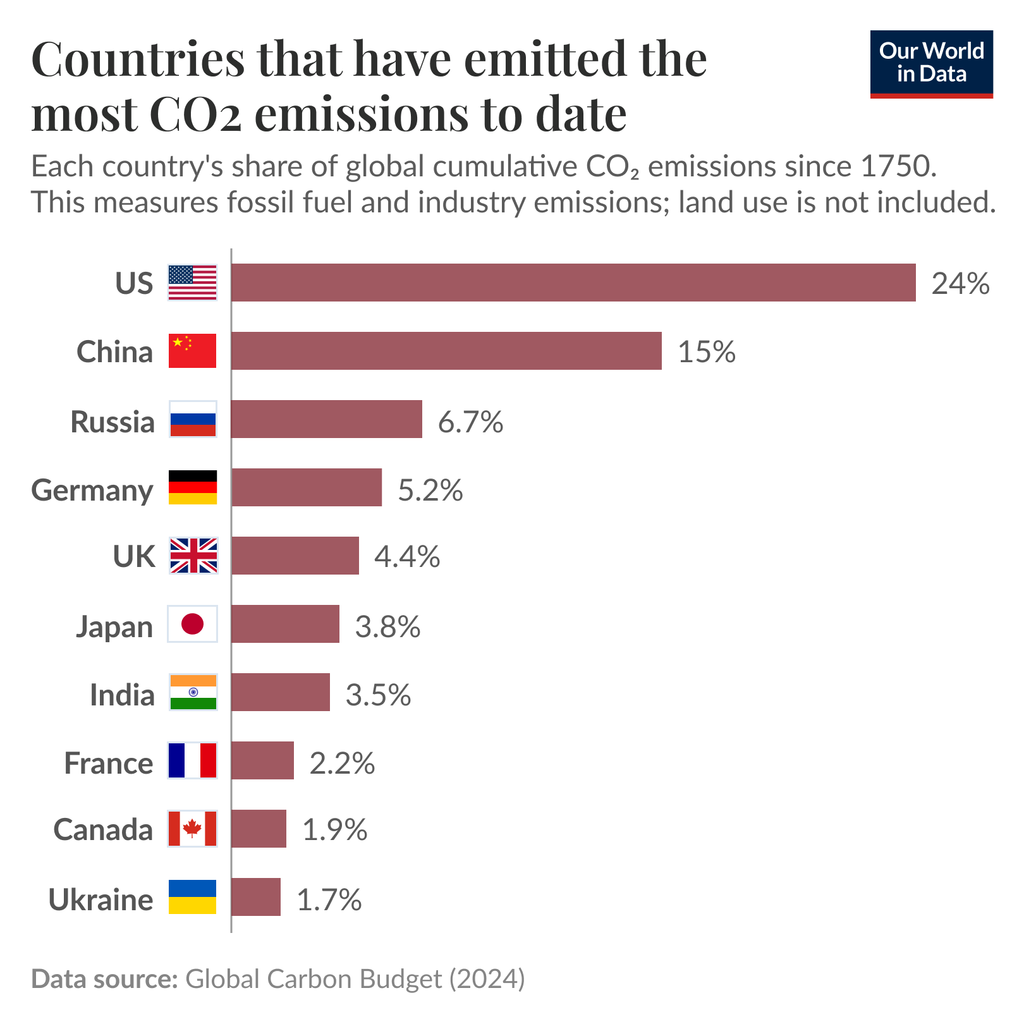
The question of fairness was also explicit in Goyal’s remarks at a roundtable during the dialogue. He argued that Western countries bear a greater historical responsibility for environmental damage and carbon emissions, while India’s contribution remains comparatively small relative to its population.
“I represent 17% of the world’s population, but my contribution to global carbon emissions is less than 3%,” Goyal said.
He also argued that Europe’s per-capita carbon emissions and environmental impact remain significantly higher than India’s. His remarks highlighted a central tension in international climate policy: how to reconcile emissions-reduction targets with differences in historical responsibility, population size and the economic costs of decarbonisation.
There is room for cooperation. German industrial technology could help Indian manufacturers improve energy efficiency and reduce emissions, while India’s growing manufacturing capacity and domestic demand could offer European companies opportunities to scale new technologies.
An invitation to the Mittelstand
Goyal’s appeal to German industry was direct. “I would love to have your Mittelstand into India,” he said, adding that he wanted to learn from Germany’s training and apprenticeship programmes.
The invitation goes beyond exporting machinery or opening sales offices. It points towards partnerships involving manufacturing, technical training and the transfer of industrial knowledge.
Germany’s strengths in precision engineering, industrial automation and specialist machinery could help Indian companies improve productivity and move into higher-value production. German businesses could gain access to new customers, expand their manufacturing footprint and participate in developing supply chains.
Yet a large market alone does not guarantee successful investment. Companies need predictable regulation, dependable infrastructure, skilled workers and commercially sound projects.
The emphasis on apprenticeships is particularly important. Germany’s dual vocational training system combines classroom instruction with practical workplace experience, linking skills development directly to industrial needs.
Cooperation in training could help Indian manufacturers build technical capabilities while supporting local employment. The opportunity is not to transplant Germany’s model wholesale but to adapt its most useful elements to Indian conditions.
The India–EU trade agreement test
The proposed India–European Union free trade agreement provides a test of whether political goodwill can translate into a more predictable commercial relationship.
Goyal said the agreement’s conclusion had been announced on 27 January 2026 and expected it to become operational in the first quarter of 2027, subject to the remaining legal and institutional procedures.
He presented the deal as evidence of what trusted partners could achieve, asserting that no country was opposing any part of the agreement. Its eventual implementation, however, will matter more than the declaration itself.
A trade agreement can reduce tariffs and uncertainty, giving businesses a clearer framework for decisions on sourcing, production and investment. It cannot eliminate operational risks or guarantee that companies will find the economics attractive.
Businesses will still have to assess demand, infrastructure, regulatory requirements and costs across jurisdictions. But a stable framework can make long-term commitments easier to justify, particularly in industries where new facilities and supply chains require substantial capital.
That is where trust becomes an economic asset rather than a diplomatic slogan.
Trust as an industrial resource
Rare earth elements have come to symbolise the vulnerabilities of global supply chains. Their importance to advanced manufacturing and clean technologies has made supply security and diversification priorities for governments and businesses.
Goyal extended that logic to international relationships. Materials may be scarce, he argued, but dependable partners can be scarce, too. Companies can seek alternative suppliers or markets; they cannot easily plan around rules that change unpredictably or relationships that repeatedly break down.
Trust, however, requires more than rhetoric. It depends on predictable rules, reciprocal market access, credible commitments and mechanisms for resolving disputes without destabilising broader economic ties.
For Europe, that means weighing environmental and industrial safeguards against the costs of unnecessary complexity. For India, it means demonstrating that international companies can invest and compete in a stable, transparent business environment. Both must recognise that economic security does not necessarily require producing everything domestically or restricting access to foreign markets.
A more resilient approach may lie in building networks of capable partners whose commercial interests are strong enough to sustain cooperation through political and economic uncertainty.
At the Berlin Global Dialogue, Goyal’s message was clear: Europe should look beyond immediate trade disputes and build a more ambitious industrial relationship with India.
Joint manufacturing, technical training and investment in cleaner production offer practical ways to turn that invitation into results. But both sides must reconcile differences over regulation, market access and the costs of decarbonisation.
For German manufacturers, the opportunity will ultimately come down to whether partnerships in India deliver reliable suppliers, skilled workers and commercially viable production. For Indian industry, the question is whether European investment brings technology and expertise that can strengthen domestic manufacturing.
Goyal’s closing message was that friendly countries should collaborate, co-create and complement one another for the wider global good.
Trust may not appear on a balance sheet like a shipment of steel or a stockpile of critical minerals. Yet without it, neither may move as freely as businesses and governments would like.
The article draws on a panel discussion at the Berlin Global Dialogue featuring Piyush Goyal, Minister of Commerce and Industry of India; Tan See Leng, Minister for Energy and Industry of Singapore; Martin Blessing, Representative for the Chancellor for Investments, Germany; and Emma Marcegaglia, CEO of Marcegaglia Steel. The discussion was moderated by Lars-Hendrik Roller, Chair and Founder of the Berlin Global Dialogue.